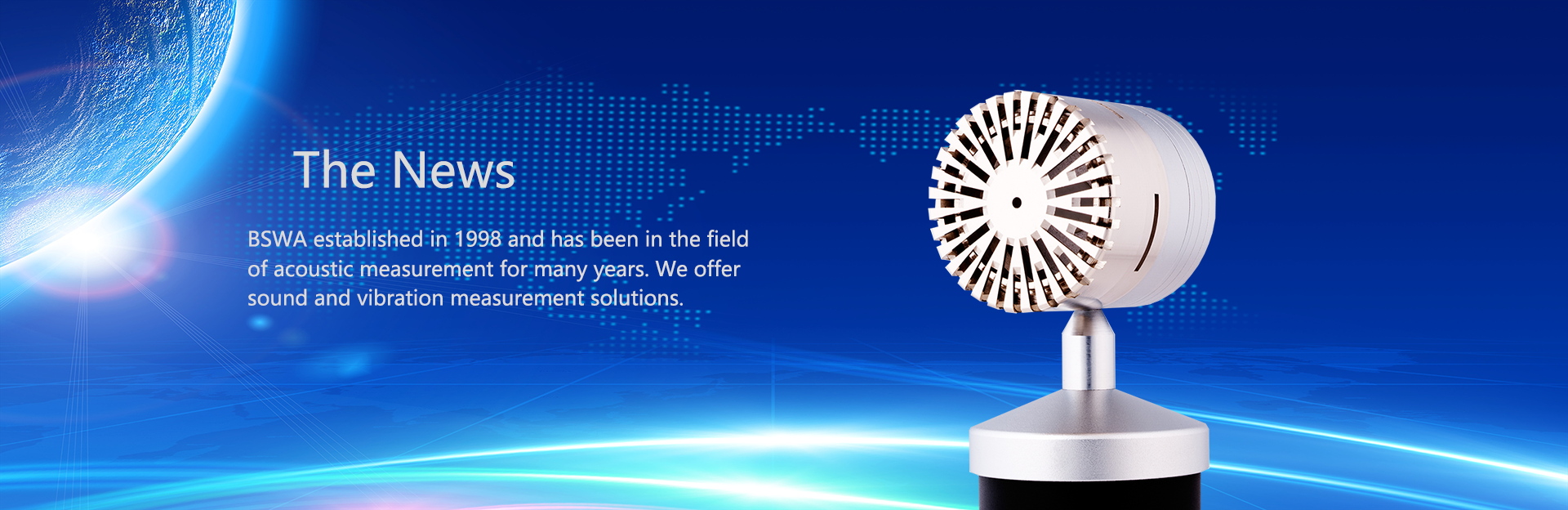
XCA919 High-Frequency Sound Source: The Golden Standard for Acoustic Testing
2026-05-20Key Specifications at a Glance - 4 Performance Metrics
| Specification | Value |
|---|---|
| Frequency Range | 2 kHz – 40 kHz (±4 dB) |
| Total Harmonic Distortion | ≤ 3% |
| Nominal Impedance | 4 Ω |
| Continuous Power Output | 50 W |
Product Overview - IEC 61094-8 Compliant
The XCA919 High-Frequency Free-Field Standard Sound Source is an IEC-compliant professional acoustic testing device covering 2 kHz–40 kHz with total harmonic distortion ≤3%, designed for high-frequency microphone calibration and sound level meter verification[1]. Built for accurate free-field sensitivity and frequency response measurement, it features a spherical anti-reflection housing, 4 Ω low impedance, and 50 W continuous power output.
It delivers stable, low-interference, and high-purity sound signals, serving as the authoritative golden standard for laboratory metrology, industrial production, and academic high-frequency acoustic research. The device complies with IEC 61094-8[1], GB/T 3785[2], and JJG 188[3] calibration standards.
Key Advantages - 4 Core Strengths
Wide High-Frequency Coverage: 2 kHz – 40 kHz (±4 dB)
Covering full high-frequency and ultrasonic bands, the XCA919 maintains a flat frequency response within ±4 dB, fully meeting the requirements specified in IEC 61094-8 for free-field calibration of measurement microphones[1]. It addresses high-frequency testing demands for professional microphones and sound level meters that ordinary sources with limited 8 kHz–20 kHz range cannot satisfy.
Low Distortion & High Precision: Total Distortion ≤3%
Equipped with a 1-inch high-sensitivity low-Q speaker unit, the XCA919 controls total harmonic distortion below 3%, ensuring ultra-pure and consistent sound output[4]. This eliminates data deviation during acoustic calibration, a common issue with ordinary sources operating at ≥8% distortion.
Industrial-Grade Output: 4 Ω Nominal Impedance & 50 W Continuous Power
With 4 Ω standard low impedance and 50 W continuous rated power, the device is universally compatible with mainstream standard amplifiers. No custom drive equipment is required for fast on-site deployment, reducing overall system costs and simplifying integration into existing test infrastructure.
Anti-Interference Design: Minimal Secondary Radiation
The integrated spherical housing structure greatly reduces sound reflection and secondary radiation. It builds an ideal free-field testing environment and effectively blocks external acoustic interference that would otherwise compromise calibration accuracy in laboratory and production settings.
XCA919 vs. Ordinary High-Frequency Sound Sources - 6 Criteria Compared
For high-frequency calibration and testing of microphones and sound level meters, the accuracy of results depends entirely on the standard sound source's frequency response, signal stability, and anti-interference ability[1]. The following comparison demonstrates how the XCA919 outperforms ordinary high-frequency sound sources across every critical metric.
| Comparison Item | XCA919 | Ordinary Sources |
|---|---|---|
| Frequency Range | 2 kHz – 40 kHz (±4 dB) | Limited, mostly 8 kHz–20 kHz |
| Total Distortion | ≤3% | ≥8%, poor sound purity |
| Impedance & Power | 4 Ω / 50 W continuous | Non-standard, requires dedicated amplifiers |
| Structural Design | Spherical housing, low secondary radiation | Ordinary shell, strong reflective interference |
| Compliance Standards | IEC 61094-8, GB/T 3785, JJG 188 | Basic industrial internal standards only |
| Application Scenarios | Metrology calibration, labs, mass production testing | Simple functional testing only |
Core Applications - 3 Professional Scenarios
1. High-Frequency Microphone Testing
Complete free-field sensitivity and frequency response testing for high-frequency and ultrasonic microphones, fully compliant with IEC 61094-8 methods for free-field calibration of working standard microphones by comparison[1]. The XCA919 provides the reference sound field required for accurate characterization across the full 2 kHz–40 kHz range.
2. High-Frequency Sound Level Meter Calibration
Meets national standards for professional laboratory metrology and official inspection, including GB/T 3785 for electroacoustic sound level meters[2] and JJG 188 verification regulation for sound level meters[3]. Test results generated using the XCA919 are recognized for formal certification and verification workflows.
3. Laboratory High-Frequency Acoustic Research
Provides stable, clean high-frequency reference signals for acoustic analysis, ultrasonic research, and experimental measurement in academic and R&D environments. The low distortion and flat frequency response ensure consistent results across extended testing campaigns.
User Core Benefits - 3 Pillars
Authoritative & Compliant
Fully meets IEC international standards and Chinese national metrology standards, ensuring test results are valid for inspection, metrology, and production quality control[1]. Compliance with GB/T 3785 and JJG 188 provides the regulatory recognition required for formal certification processes.
Accurate & Anti-Interference
Low distortion (≤3%), high signal-to-noise ratio, and radiation suppression design ensure long-term reliable test data. The spherical housing eliminates the reflective interference common in ordinary enclosures, maintaining measurement integrity in demanding environments.
Cost-Effective & Easy Operation
Compact and lightweight structure, compatible with universal amplifiers. One device handles multiple high-frequency calibration tasks, lowering overall equipment costs and reducing the need for dedicated drive equipment.
FAQ
What is the frequency range of the XCA919 High-Frequency Sound Source? The XCA919 covers 2 kHz to 40 kHz with a flat response within ±4 dB, spanning the full high-frequency and ultrasonic bands required for professional microphone and sound level meter calibration. This exceeds ordinary sources, which are typically limited to 8 kHz–20 kHz.
What standards does the XCA919 comply with? The XCA919 complies with IEC 61094-8 (free-field calibration of measurement microphones), GB/T 3785 (electroacoustics — sound level meters), and JJG 188 (verification regulation for sound level meters). Test results are recognized for formal inspection and metrology purposes.
How does the XCA919 achieve low distortion? It uses a 1-inch high-sensitivity low-Q speaker unit that keeps total harmonic distortion at ≤3%, ensuring ultra-pure sound output and eliminating data deviation during calibration. Ordinary sources typically exhibit ≥8% distortion with poor sound purity.
Does the XCA919 require a special amplifier? No. With 4 Ω nominal impedance and 50 W continuous rated power, the XCA919 is universally compatible with mainstream standard amplifiers. No custom drive equipment is needed, enabling fast on-site deployment.
What are the main applications of the XCA919? Three primary uses: high-frequency microphone free-field testing per IEC 61094-8; sound level meter calibration per GB/T 3785 and JJG 188; and laboratory high-frequency acoustic research including ultrasonic analysis.
How does the spherical housing design reduce interference? The integrated spherical housing greatly reduces sound reflection and secondary radiation. Unlike ordinary flat or rectangular enclosures that create strong reflective interference, the spherical geometry promotes uniform wavefront dispersion, building an ideal free-field testing environment.
References
[1] International Electrotechnical Commission, "IEC 61094-8 -- Measurement microphones -- Part 8: Methods for free-field calibration of working standard microphones by comparison." https://webstore.iec.ch/en/publication/4486
[2] Standardization Administration of the People's Republic of China, "GB/T 3785 -- Electroacoustics -- Sound level meters." National Standard of the People's Republic of China. https://openstd.samr.gov.cn/
[3] State Administration for Market Regulation, "JJG 188 -- Verification Regulation of Sound Level Meters." National Metrology Technical Regulation of China. https://openstd.samr.gov.cn/
[4] BSWA Technology, "XCA919 High-Frequency Free-Field Standard Sound Source." Product page. https://www.bswa-tech.com/?p=580&a=view&r=113
[5] BSWA Technology, "Acoustic and vibration measurement solutions since 1998." Corporate website. https://www.bswa-tech.com