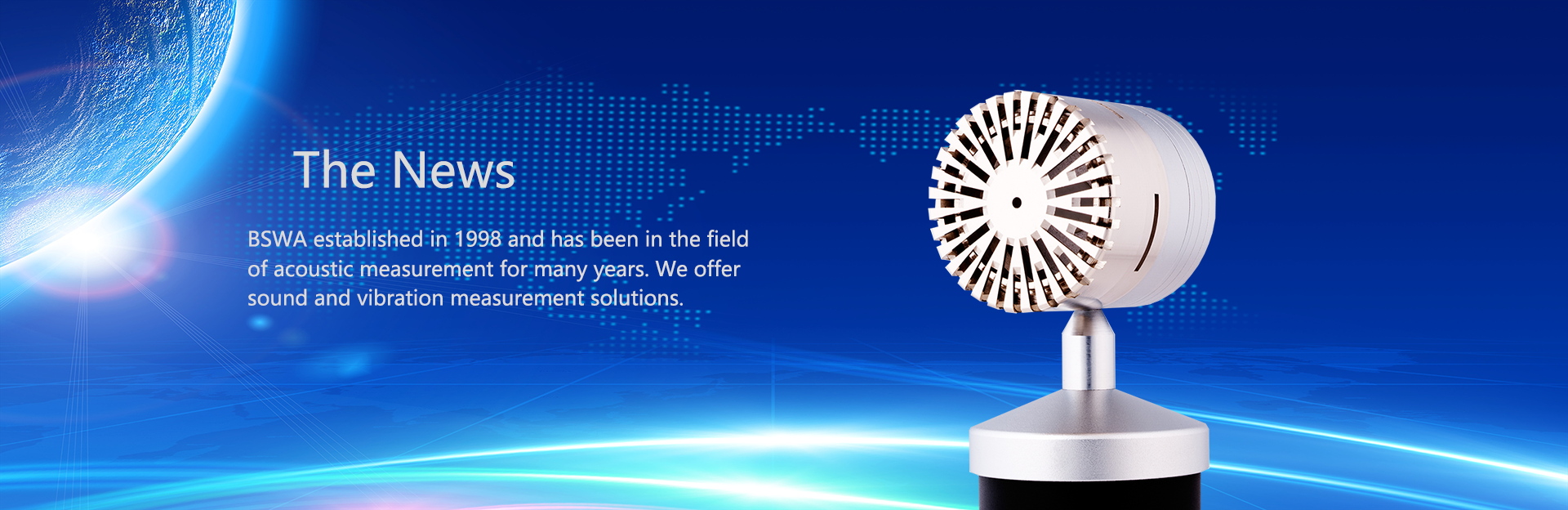
XMPA221 1/2-inch Microphone Set
2025-12-15● About The Microphone Set
The output impedance of the working standard microphone can reach more than GΩ level, so it cannot be directly connected to the data acquisition equipment. The preamplifier must be used to reduce the output impedance to below 100 Ω. The traditional condenser microphone also needs the preamplifier to provide an external polarization voltage of 200 V to charge the capacitor, or coat the rear plate with electret material that can store charge to replace the polarization voltage (prepolarized).
Anyway, different microphone types need to be matched with corresponding preamplifiers to work. BSWA offers the microphone set that consists of microphone cartridge and preamplifier, is reliable and robust. The microphone set is assembled in a clean-room environment, reducing the potential measurements errors cause by the interface contaminating.
● Compatibility
BSWA MK series external polarization microphone needs to be matched with MV series traditional 200 V preamplifier and MC7xx series conditioner; while MP type prepolarized microphone need to be matched with MA series ICCP preamplifier and MC1xx series conditioner. The connection thread between the microphone and the preamplifier complies with WS2 (1/2-inch) or WS3 (1/4-inch) standard, and the same type of microphone or preamplifier can be connected to each other.
● Preamplifier’s Impact
The preamplifier not only reduces the output impedance, but also has a certain impact on the performance of the microphone, as described below:
1. Sensitivity: Preamplifier always lowers the sensitivity of the microphone. The typical attenuation value is about 0.3 dB.
2. Self-generated noise: The output noise of the microphone is thermal noise, and the preamplifier will bring a certain amount of electrical noise. Therefore, the total output noise of the combination of microphone and preamplifier is the sum of thermal noise and electrical noise.
3. Maximum output voltage: The maximum output voltage of the microphone is the product of its maximum sound pressure level and its sensitivity. This value often cannot exactly match the maximum output voltage of the preamplifier. The maximum output voltage of the combined microphone and preamplifier is determined by the smaller of the respective maximum output voltages of the microphone and preamplifier. Therefore, if the maximum output voltage of the preamplifier is smaller than the maximum output voltage of the microphone, the dynamic range of the microphone will be reduced.
4. Frequency response: The MA series ICCP-powered preamplifier has certain attenuation at low frequency, but it can still meet the general requirements from 20 Hz to 20 kHz.
● XMPA221 Microphone Set
XMPA221 is a combination of XMP221 microphone and MA231A preamplifier, which can be separate into XMP221 and MA231A according to user’s application.
XMP221 is a 1/2-inch free-field microphone, suitable for measurement in free-field and semi free-field without reflection. It is prepolarized microphone without the need for external polarization voltage and suitable for ICCP-powered preamplifier. It is complying with IEC 61094 WS2F standard.
MA231A is a 1/2-inch ICCP-powered preamplifier, suitable for prepolarized microphones.
Optional TEDS is available for most of BSWA preamplifier to support read microphone information directly by data acquisition equipment, including microphone model, serial number, sensitivity, etc. BSWA TEDS microphone supports the IEEE 1451.4 standard. The v0.9 version is used by default to be compatible with more data acquisition equipment. The v1.0 version can also be selected according to user’s requirements.
Features:
● 1/2-inch free-field microphone
● Sensitivity (@250 Hz): 50 mV/Pa (-26 dB re 1V/Pa)
● Frequency response: 10 Hz ~ 10 kHz (±1 dB)
6.3 Hz ~ 20 kHz (±2 dB)
● Dynamic range: 17.5 dBA ~ 146 dB
● Polarization voltage: 0V (prepolarized)
● Pressure equalization: rear-vented
● Optional TEDS (IEEE.1451.4)
Applications:
● General purpose acoustic measurements.
● Electroacoustic measurements
● Mainstream sound level meters
Please click the link below for detailed information: